
|
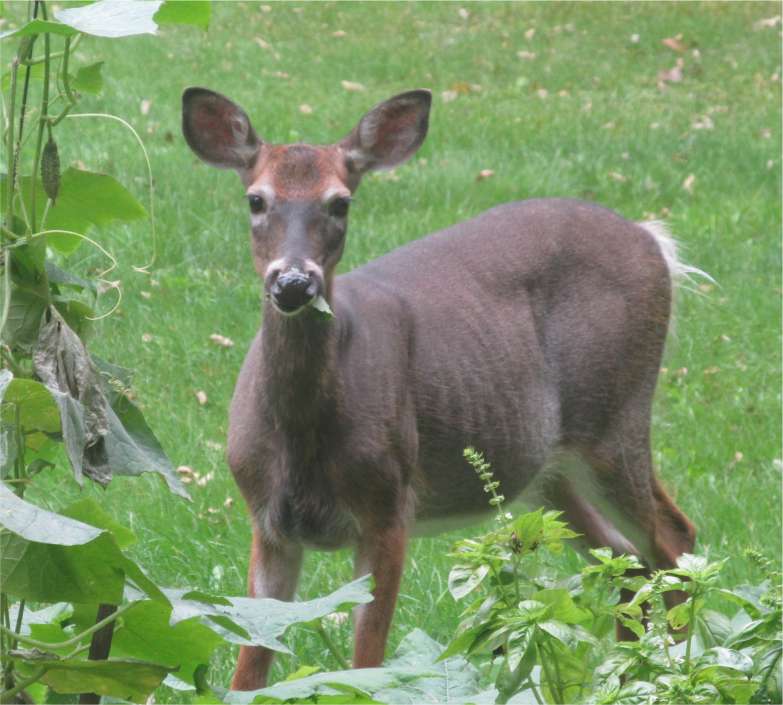 "Window meeting" Photo taken by Judy Wilbur Craig in Dexter with TheDailyME.com readers? Email to Editor@TheDailyME.com) |
|
MAINE - The First Time Campers program will randomly select forty-four (44) lucky Maine entrants to win a free weekend of camping this summer at one of eleven (11) Maine state park campgrounds. This raffle is open only to Maine families and individuals who have never before gone camping. Each selected winner will get the free use of camping equipment, receive gifts from sponsors and be supported throughout the weekend by park staff. This year, one of those fortunate winners also will be the grand-prize recipient of a $1,000 gift certificate from the program's major sponsor, L.L.Bean. Raffle applications are available on line and at Maine state parks. They will be accepted from April 1 to May 31. The recipients will be chosen in a random drawing held on Tuesday, June 4, with the winners notified the week of June 9. There will be four weekends of camping from which the lucky winners can choose, from the weekend of July 12-14 through the weekend of Aug. 2-4. For more information about the First Time Campers program or to register to win, visit http://www.parksandlands.com or call Frank Appleby, Park Manager, Bradbury Mountain State Park, at: 207-688-4712 PENQUIS - Homeowners may benefit in many ways from stocking their ponds with trout, such as visually enjoying trout swimming in their pond and seeing increased wildlife on their land. The Piscataquis County Soil and Water Conservation District's Annual Trout Sale will be held on Saturday, May 4th at 11:30AM. Customers must pre-order all rainbow and brook trout by Thursday, May 2nd in order to receive them on May 4th. A permit is required by the Inland Fisheries and Wildlife Department for the species most appropriate for your pond. A copy of this will need to be submitted with your preorder, as well as a copy of a map that clearly depicts the location of your pond. You will also need to bring your original permit to the sale in order to receive your trout. If you do not have a permit you may pick up an application from the PCSWCD office, request one by email from us or download the application from the Maine Department of Inland Fisheries and Wildlife website at hwww.maine.gov/ifw/licenses_permits/forms_applications.htm Contact the PCSWCD at 564 - 2321, Extension 3, by email at info@piscataquisswcd.org, or stop in at the USDA Service Center at 42 Engdahl Drive in Dover - Foxcroft for more information on this sale that supports our education programs and enhances your natural landscape. MAINE - Applications for the 2013 Maine Moose Permit Lottery now are being accepted. It's simple to apply! And you get instant confirmation of your entry into the lottery! Apply here: www.mefishwildlife.com. The deadline for online applications is May 14, 2013. If you applied for a moose permit last year or the year before, all of your information is pre-filled into this year's online application. To start, type in your first name, last name and date of birth the same way as in 2012 or 2011. The computer will look up your information. Please review your personal data and make any necessary changes. It's easy! Once you've filled out and paid for your application, you'll be able to print out a confirmation page. An email confirmation will also be sent to you. Permit winners and their subpermittees will be able to hunt in one of the department's 25 wildlife management districts (WMD's), which cover more than 21,000 square miles. Legislative changes put into effect last year have given long-time lottery applicants who have never won a permit a better chance at winning. Bonus points are awarded for each consecutive year the applicant has applied for the lottery since 1998 without being selected and each bonus point gives the applicant an additional chance in the drawing. Bonus points are earned at the rate of one per year for years one to five, two per year for years six to 10, three per year for years 11 to 15 and 10 per year for years 16 and beyond. Starting in 2011, applicants can skip a year and not lose their bonus points. So if you applied in 2011 but not in 2012, you still have your points if you apply in 2013. By Dave Barber, BDN Staff: BANGOR, Maine — The Dexter High School cheering squad went with its most experienced cheerers Saturday and it paid off with a second straight Eastern Maine Class C championship at the Bangor Auditorium. The Tigers put nine of their 17 members on the floor and scored 125 points for their routine to top the field of 12 teams. The other eight stepped aside after introductions and added their voices to the music and cheered in support. Dexter, which performed last among the Class C teams, had an early wobble on a lift, but the Tigers worked through it and performed cleanly after that. Sumner of East Sullivan was the runner-up at 118.8, followed in order by Orono, Houlton, Bucksport and defending Class C state champion Central of Corinth. The top six teams advance to the state championships Feb. 9, also at the Bangor Auditorium. The full Dexter squad consists of: Katelyn Morgan, Taylor Goulette, Harley Ponte, Aaliyah Williams, Katie Merrill, Sarah Vigue, Mackenzie McKusick, Shayna Fogg, David McKusick, Madison Provost, Ansalewit Laughton, Danielle Whitten, Laurel Desmarais, Airiell Knowlton, Phoebe Phillips, Emmitt Ross, Alex Wulf, Stacey Allen and Autumn-Mae Young; coach: Kacie Ladd. The Sumner team is: Emma Fitzgerald, Jordan Hanscom, Cassidy Andrews, Hannah Fleming, Emily Martin, Aiyla Petty, Cynthia Stewart, Katrina Hayward, Whitney Ranco, Sarah Young, Alexandria Tracey, Amie O'Hara and Olivia Driver; coach: Courtney Briggs."This content originally appeared as a copyrighted article in the Bangor Daily News and is used here with permission."
Bears have recently emerged from their dens throughout Maine and are in search of food that is not readily available to them at this time of year. They are drawn to bird feeders, garbage cans, dumpsters and grills - where food or the odor of food is prevalent - or to areas where people believe it's OK to leave food for them. For birds, however, spring and summer offers an abundance of natural food and therefore they don't need to be fed by people. "Each spring, we encourage people to bring in their bird feeders and rake up any seed left on the ground," according to MDIF&W Wildlife Biologist Jennifer Vashon. "If people want to continue to feed birds, we ask them to wait until berries have ripened later in the summer when bears are less likely to wander through backyards searching for food. The best way to keep bears in the wild is to not make it easy for them to make themselves at home in your backyard. "It is also important to remember that other food odors attract bears to your back yard," Vashon said. "Garbage that is brought to the curb the night before pickup or is stored outside is a great temptation to a bear. We encourage everyone to keep their garbage inside until the morning of trash pickup." An incident two years ago in Livermore Falls, where a mother bear and her two 80-pound yearlings needed to be trapped and moved from a neighborhood, illustrates how bears become dependent on people for food - and become a nuisance to fearful neighbors. The sow and her two cubs that once had been trapped in New Hampshire neighborhoods and moved to northern New Hampshire woods found their way to Maine. The year before, she had wandered through Livermore Falls area with her young cubs, and people hand-fed them or placed bird seed outside for them. The following year, some people continued the same feeding behaviors while others became worried about the bears' close proximity to homes. Bears who become reliant on people for food return to the same locations to eat. "The worst case scenario is that a bear will hurt someone," according to Vashon. "It's happened elsewhere and it could happen here. In this unfortunate circumstance, we'd have to destroy the bear." Spring is when the Maine Department of Inland Fisheries and Wildlife and the Maine Warden Service receives hundreds of nuisance animal complaints, and bears near homes and in neighborhoods are among the calls. The Department strongly encourages people not to feed birds in the spring and summer. Birds are able for find food elsewhere. Although we discourage leaving feeders out during the day and bringing in the feeders at night, if you feel that you have to watch birds during the day, please rake up all of the food underneath the bird feeder site so that bears are not drawn to it. To deter bears, we suggest the following:
207-287-8000 for Administration, Fisheries and Wildlife Divisions, Maine Warden Service, general information about fish and wildlife, licenses, boating and recreational vehicle registration. 207-287-8003 to reach the automated Fish and Wildlife line. This line provides 24 hour information and updates on hunting and fishing seasons and new laws. To reach a game warden 24-hours a day please contact Maine State Police at one of the following numbers:

Copyright 1997-22 The Daily ME, All Rights Reserved * Owned & Operated by Judy Craig Consulting * Updated: Powered by Maine Hosting Solutions |



 Dexter Lakes Association